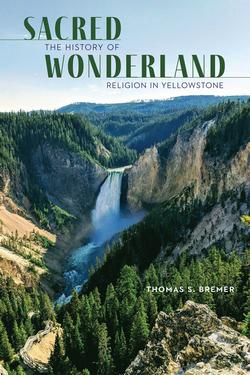
I’m pleased to announce that my book, Sacred Wonderland: The Religious History of
Yellowstone, is now available from the University of Nebraska Press. It’s been a long time in the making, twenty years from first deciding to write about Yellowstone to when I turned in the final manuscript. That’s many more years than I expected to be working on it, though I’m glad it took so long. It is a different book than I would have written if I stayed with a more normal timeline.
Most
significantly, my relationship with Yellowstone has changed. When I began working on this book in 2004, I had an uncritical affection for the park. It had been a special place for me since childhood. Its unmatched diversity of attractions enchanted me, not only the geysers and wildlife but the great expanse of wilderness with hundreds of miles of trails. Nothing thrilled me more than paddling a canoe to the backcountry on Yellowstone Lake, backpacking on the Bechler River, or trekking across the
Central Plateau on the Mary Mountain and Nez Perce trails.
As I learned more about the history of the national park, I began questioning my love for Yellowstone. The story I had often heard about Yellowstone’s origin was the infamous campfire myth. It told how a group of forward-thinking men, on the final night of their expedition to explore the area, sat around their campfire and marveled at all they had seen. They
agreed that Yellowstone should be preserved forever as a park for others to enjoy.
That tale was the National Park Service’s official story for decades. Not only was it untrue, it hid a less noble history. And like most stories about preserving and protecting wilderness, it overlooked the important role of religion.
Adding religion to the
Yellowstone story gave me something to write about, but it also had me thinking about my place in this history. As I acknowledge in the Postlude of the book, “Diving deeply into the history of the national park has left me with ambivalence about a place I have loved for most of my life and thought I knew well.” Like any relationship, close examination makes it more complicated but also more interesting. I conclude, “I cannot stop loving the park, but I do so with a more complex understanding of
why and how I have found it valuable in my life.”
Publication of the Sacred Wonderland book finishes a long chapter in my life. This project was with me for most of my academic career. Whenever my plate was clear of other obligations, I always had the Yellowstone book to work on. Now that it’s done, I finally feel fully retired. But I’m not through with writing. There’s always more to say, new ideas bubbling up,
and next month’s newsletter to think about.
Kind regards,
Tom
Op-Ed: Preserving America’s Best Idea
I recently published an opinion
piece for National Parks Traveler regarding the threat parks face from the current U.S. administration, not only to the parks but to democracy itself. I discuss how U.S. national parks have been aspirational symbols of democratic ideals. However, the president’s budget proposal drastically slashes the National Park Service funds, which will make privatizing them a viable option. Turning the national parks into exclusive, profit-driven enterprises will reverse decades
of progress in fulfilling their democratic aspirations as places for the benefit and enjoyment of all people. I am hopeful, though, that the parks’ immense popularity will inspire resistance to making them private resorts for the exclusive enjoyment of wealthy visitors. After all, they are valuable models of America’s democratic aspirations. You can read the Op-Ed here.
News, Commentary, and other items of interest
Forest pharmacy: “If we value the medicine the land offers us so generously, we must become medicine for the land”—Robin Wall Kimmerer: Blue Medicine Line - Orion Magazine
Preserving glacier legacies with art: “Everybody takes in information in different ways, and so to add art to that conversation and help people take in information is my way of communication.” How to preserve a glacier’s legacy - High Country News
This view of the Lower Falls of the Yellowstone River is among my favorite Yellowstone images. Snow still covers much of the park
in early May, and fewer visitors crowd the popular scenic overlooks. When I made this photo with snow squalls moving toward the canyon, I was alone at Artist's Point, a rare experience. I proposed the photo for the cover of the Sacred Wonderland book when I submitted the final manuscript, but the designers went with a brighter, more typical image of the canyon and falls.
Like many academics, I’m not very good at promoting my own books. So, instead of making the case for reading Sacred Wonderland, I’ll let others sing its
praises. Here’s what early readers have to say:
“Timely and immensely important. Sacred Wonderland reads like a clear-eyed love letter to national parks.”
“It is a richly varied story of grand sweep—from Jesuit missionaries to Protestant financiers, from landscape painters convinced of the nation’s providential destiny to Emersonian wayfarers and naturalists.”
“With its concern for the exercise of (soft) power, Sacred Wonderland stands
at the leading edge of historical scholarship on nature, preservation and conservation, and religion as a social and political force.”
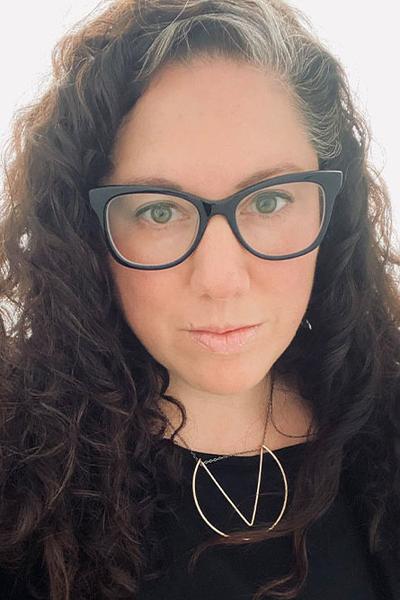
Poet Erika Meitner was raised in Queens and Long Island, New York. Besides her creative writing degrees, she earned an M.A. in religious studies, as evident in this
month’s featured poem. It recounts a road trip to Yellowstone National Park with her son. The poem comments on the crowds of summer vacationers in the park’s Upper Geyser Basin and includes references to religious visitors. I especially appreciate her use of the portmanteau “tourons,” combining tourists and morons, which are abundant among Yellowstone’s visitors. Meitner is currently an English professor at the University of Wisconsin-Madison, where she also directs the Conney Project on Jewish Arts and the MFA program in Creative Writing.
Just as the Darkness Got Very Dark / Another Data Point